Share this article

How to Dress for Professional Headshots: Expert Tips

Your clothing is half the photograph. Solid, well-fitted mid-tone colors, minimal accessories, and a clean neckline are the foundation of every polished professional headshot. Get those three elements right, and your wardrobe disappears into the image exactly as it should, letting your face and expression carry the shot.

Here is the short version before we go deeper:

  • Colors that work: Navy, charcoal, forest green, burgundy, and slate blue. These solid mid-tone colors photograph reliably across skin tones and studio lighting setups.
  • Colors to avoid: Pure white, pure black, and neon hues. Pure white blows out under studio strobes; pure black flattens dimension against dark backgrounds.
  • Patterns to skip: Thin stripes, small checks, and dense prints cause moiré distortion, a shimmering optical interference that editing cannot fully fix.
  • Necklines that work: Crew necks, collared shirts, and blazers. These frame your face cleanly and read as professional at any crop level.
  • Fit rule: Clothing should skim, not squeeze. Shoulders must sit flat. Ill-fitting clothes distort your silhouette regardless of price.
  • Accessories: Small, matte, and non-reflective. One watch, small studs, a simple pendant. Nothing that dangles or catches studio light.
  • Bring options: Two to three outfits give you and your photographer flexibility without overcomplicating the session.


Table of Contents

How to dress for professional headshots: color and pattern choices

Solid colors are the single most reliable foundation for headshot attire. They hold detail under studio lighting, create clean contrast against backgrounds, and keep the viewer’s eye on your face rather than your outfit. Patterns, by contrast, compete for attention and often cause technical problems the camera cannot ignore.

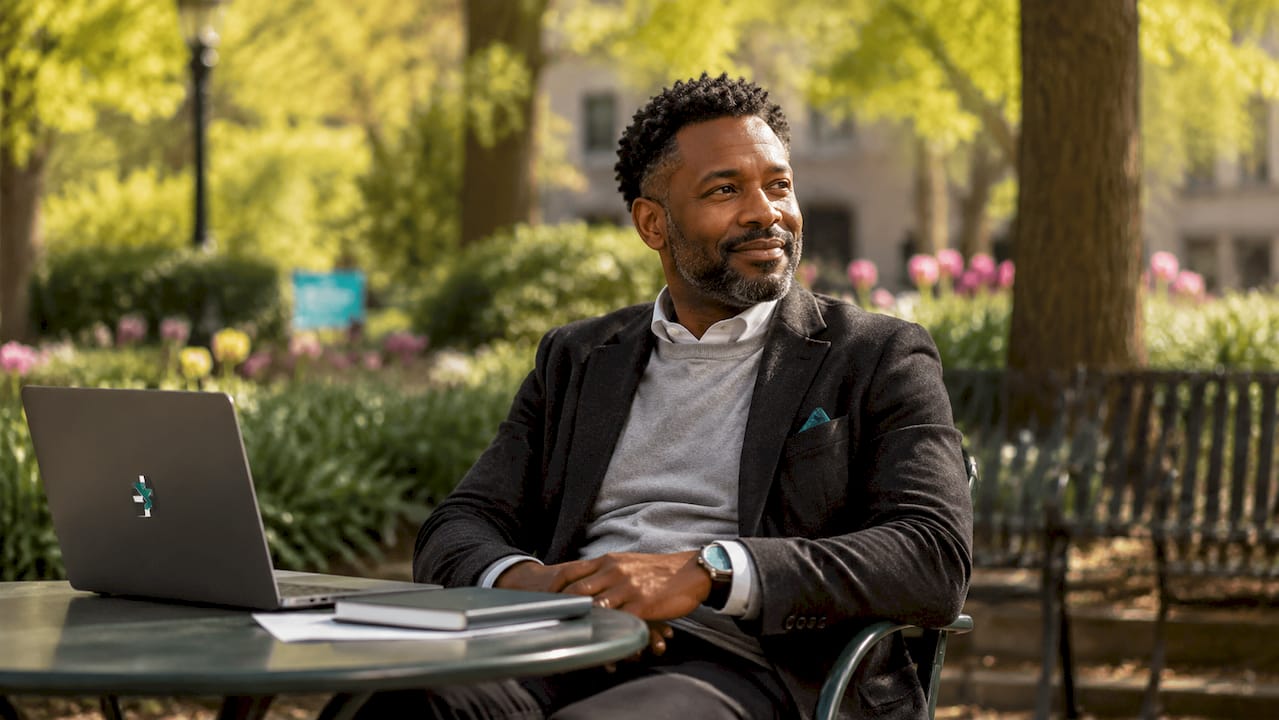
Navy is the most universally flattering choice across industries. Charcoal gray is a close second, offering a modern, clean look that pairs with almost every background. Jewel tones like deep burgundy, forest green, and teal add personality without going flashy, and they photograph especially well on warm-to-neutral skin tones.

What to wear:

  • Navy, charcoal, forest green, burgundy, slate blue, and warm neutrals like camel and taupe
  • Off-white or cream instead of pure bleached white
  • Jewel tones for creative, consulting, or leadership roles where personality matters

What to avoid:

  • Thin stripes, small checks, herringbone, and pinstripes (moiré risk)
  • Neon and very bright primaries, which reflect onto skin and dominate the frame
  • Visible logos or slogans, which date the photo and distract from your face
  • Shiny fabrics like satin and silk, which throw unpredictable highlights under strobes

Color should also reflect your industry and brand identity. A finance professional in navy reads as authoritative and trustworthy. A creative director in deep burgundy or teal signals confidence and personality. The goal is alignment between how you present to clients and how you appear on camera.

Pro Tip: Test your outfit by snapping a quick photo in natural light on your phone, then shrink it to LinkedIn thumbnail size. If your clothing distracts from your face at that scale, choose something else.


Which necklines and clothing styles work best for professional portraits

Your neckline is the frame around your face in every headshot crop. It is also one of the fastest signals of professional register, and the detail most people overlook when planning their outfit.

Structured collars and blazers suggest authority and tradition. They read as “senior” across almost every industry, from finance to healthcare. Crew necks communicate approachability and modernity, particularly when the fit is clean at the shoulder. Modest V-necks elongate the face and work well for those who feel higher collars crowd their jawline.

Necklines that photograph well:

  • Collared shirts and button-downs (frame the face, universally read as professional)
  • Blazers over a solid underlayer (add structure and polish to any look)
  • Crew necks with a clean shoulder fit
  • Modest V-necks that stay above the chest in a tight crop
  • Boat necks for square jaw lines and editorial-style headshots

Necklines to reconsider:

  • Very deep V-necks, which can look unintentionally revealing once the image is cropped
  • Strapless tops and thin straps, especially for corporate or LinkedIn headshots
  • Very high turtlenecks under studio lighting, which can visually compress the neck

Layering with a well-fitted blazer or structured jacket is the most reliable upgrade you can make to any look. It adds visual dimension, signals intentionality, and works across every professional context. Style should also align with your industry: a blazer over a clean tee is the current standard for tech and startup headshots, while a tailored suit jacket remains the baseline for finance and law. For guidance on how portrait necklines affect framing, the principles that apply to formal portraits translate directly to professional headshots.


Fit, layering, and appearance tips for a polished headshot look

Fit is more important than price. A well-tailored affordable blazer photographs more professionally than an expensive suit that sags at the shoulders. The camera makes fit issues more obvious than the eye does in person, so this is the one area where there is no workaround.

Perfect fit starts at the shoulders. The seam should sit flat at the edge of your shoulder, with no pulling or bunching. Sleeves should end at the wrist bone. Collars should lay flat without gaping. These details read as “expensive” on camera regardless of what you actually paid.

Fit and layering checklist:

  • Shoulders sit flat with no drooping or pulling
  • Sleeves break cleanly at the wrist, not bunched or too short
  • Collar stays closed without gaping
  • Jacket buttons without strain (one-button rule for portraits)
  • No baggy sleeves, which add visual bulk and read as careless

Fabric and finish:

  • Choose matte fabrics: merino wool, structured cotton, brushed twill, quality knits
  • Avoid satin, heavy polyester, and high-shine synthetics, which throw strange highlights under strobes
  • Linen wrinkles faster than you expect; bring a steamer if you wear it

Small, matte jewelry is the right approach for accessories. A single watch, small stud earrings, a delicate necklace. Dangling earrings move during the shoot and can appear in frames. Fitness trackers and smart watches pull the image toward casual. When in doubt, subtract rather than add.


How to prepare for a smooth professional headshot session

Studio strobes and high-resolution sensors reveal every wrinkle, stray hair, and shiny skin spot. Preparation is what separates a polished result from one that needs to be reshot. Plan your wardrobe several days out, not the morning of.

A few days before:

  • Try on every outfit, including sitting down, to check for pulling, gaping, or bunching
  • Schedule any haircut or grooming at least a few days before the session, not the day before
  • Hair styled 3–7 days after a fresh cut typically photographs with fewer flyaways and a more natural fall
  • Confirm the background setup with your photographer so you can coordinate outfit tones

The day of:

  • Steam or press every outfit and bring clothes on hangers, not folded in a bag
  • Pack a lint roller, collar stays, blotting sheets, and a small brush for touch-ups
  • Arrive five minutes early to decompress before the session starts
  • Hydrate the day before; skin reads better under studio lighting when you are well hydrated
  • Skip heavy meals immediately before the session

Pro Tip: Ask your photographer about the background color before you arrive. A navy outfit on a navy backdrop loses contrast and definition. Coordinating your outfit tone with the background is one of the easiest ways to improve your headshot before the shutter clicks.

Dress one level above your normal client-facing attire. If you typically wear business casual to client meetings, step up to a polished blazer and a solid collared shirt. Authenticity reads on camera; overdressing looks stiff, and underdressing reads as casual.


Gender-specific wardrobe tips for professional headshots

The core principles apply to everyone: solid colors, proper fit, clean necklines, minimal accessories. The application shifts depending on your wardrobe options and the professional register you are aiming for.

For men

A solid navy suit or light blue dress shirt is one of the most reliable starting points for men’s professional headshots. A well-fitted sport coat over a plain tee is the current business casual default for tech and startup roles. Ties are appropriate for finance, law, and formal executive contexts; optional for most others. When wearing a tie, choose solid or subtly textured patterns and avoid thin stripes, which moiré on camera.

  • Button-downs in solid colors: off-white, light blue, and chambray are safe starting points
  • Blazer or sport coat adds structure; a well-fitted one over a simple tee reads as modern business casual
  • Shave or trim beards the morning of the session for clean edges
  • Tailor anything loose; shoulders and sleeve length are the two most visible fit issues in headshots

For women

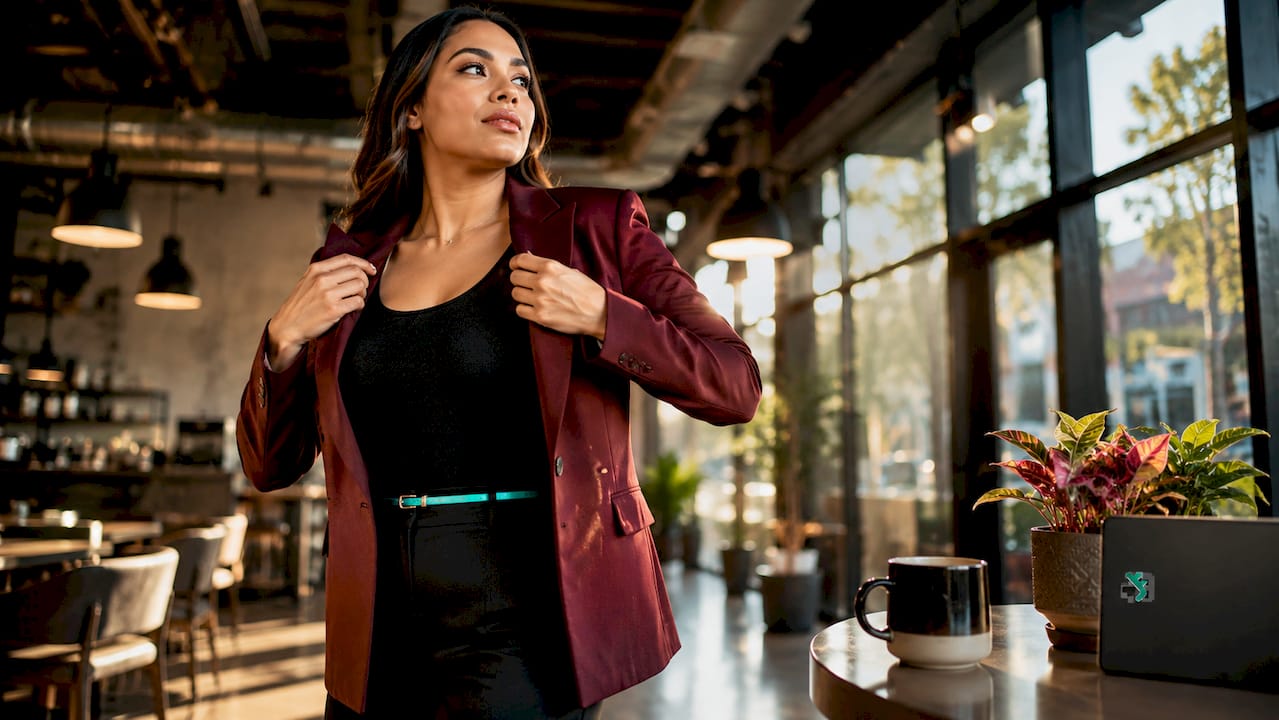
A structured blazer in a solid professional tone is the strongest single choice. A well-fitted top with a defined neckline also works well, particularly for less formal industries. Long sleeves create a clean line and avoid the distraction of bare arms in a cropped frame.

  • Solid-color blouses, sweaters, or tops with a defined neckline photograph best
  • Blazers add structure and authority; bring one even if you are unsure you will wear it
  • Avoid V-necks that go too deep for your framing; the camera sees more than a mirror does
  • Keep makeup one step stronger than your daily look, with matte finishes to reduce shine under studio lights
  • Simple jewelry: small studs, a pendant necklace, or a classic watch. Skip statement pieces and anything reflective

Both men and women benefit from bringing two to three outfit options that vary in color, neckline, and formality. That range gives your photographer the flexibility to match your outfit to the lighting setup and background on the day. For a closer look at what corporate headshots actually require, the standards are consistent regardless of gender.


Hair and makeup that complement your professional headshot attire

Hair and makeup are part of your wardrobe. They affect how polished and cohesive the final image looks, and they interact directly with your clothing choices and the studio lighting.

Hair

Style your hair the way you would for your most important client meeting, not a special occasion and not a casual day. The version a colleague would expect to see. Get any haircut done at least a few days before the session; a cut less than 24 hours old can photograph with sharp, unnatural edges that settle within a few days.

For longer hair, consider whether you want it up or down before the session. Both work, but consistency matters: choose one style and commit to it for each outfit. Pulled-back styles tend to emphasize the face more directly, which suits formal corporate headshots. Loose styles can feel warmer and more approachable, which works well for real estate, healthcare, and creative roles.

Makeup

The goal is your regular workday look, slightly elevated. Studio strobes flatten natural color, so what looks like enough coverage in the mirror often reads lighter on camera. Matte finishes photograph cleaner than dewy ones under studio lighting. Skip heavy contour that looks polished in person but reads muddy in a photograph.

  • Use a matte foundation or powder to reduce shine; blotting sheets in your kit handle touch-ups on set
  • A tinted lip in a neutral pink, rose, or berry outperforms a bold matte red for most professional headshots
  • Avoid shimmer on the cheekbones; studio lights amplify it
  • Get any skin treatments or shaving done at least 48 hours before the session so redness has time to settle
  • Bring a small brush and powder for on-set touch-ups between outfit changes

The right hair and makeup choices do the same thing as the right clothing: they recede into the image and let your expression do the work. When everything is cohesive, your portrait photography result feels natural, confident, and genuinely you.


Key Takeaways

The most effective approach to dressing for professional headshots is solid mid-tone colors, proper shoulder fit, and minimal accessories that keep the viewer’s attention on your face.

Point Details
Solid colors win every time Navy, charcoal, forest green, and burgundy photograph reliably; patterns cause moiré distortion that editing cannot fix.
Fit matters more than price Shoulders must sit flat and sleeves must break at the wrist; a tailored affordable blazer outperforms an ill-fitting expensive suit.
Neckline frames the face Collared shirts, crew necks, and blazers create a clean professional frame; deep V-necks can look unintentional once the image is cropped.
Prepare days in advance Steam clothing, schedule grooming 3–7 days before the session, and coordinate outfit tones with your photographer’s background setup.
Accessories subtract, not add Small, matte jewelry and a single watch are enough; anything reflective or dangling competes with your face in a tight crop.

Ready to put these wardrobe tips to work? JFPhotos brings over a decade of portrait and professional photography experience to every session in Phoenix, AZ. Book your headshot session with JFPhotos today and walk in confident, knowing your look is ready for the camera.

Recommended

Recent Posts

Family reading a colorful brochure together outdoors in a sunny garden.
By Justin Frazier July 24, 2026
Discover what a family photography style guide is and how it ensures your family looks confident and comfortable in every photo session.
Text reading “Best hrphotoandfilm.com Alternatives for 2026” on a white background with pink abstract swirls.
By Justin Frazier July 23, 2026
Discover the best hrphotoandfilm.com alternatives for 2026. Explore top providers for local photography, technical services, and more!
Two people reviewing a photo album together at a kitchen table, smiling and pointing at pages
By Justin Frazier July 22, 2026
Discover why hiring a wedding photographer early is crucial. Secure your preferred date, find the right style, and enjoy peace of mind on your big day.
Photographer kneels at a garden wedding ceremony as the bride and groom stand before seated guests.
By Justin Frazier July 21, 2026
Discover the essential role of second photographer weddings. Capture every moment and emotion for a complete, stunning wedding album!
Man adjusting a camera tripod on a sunny palm-lined walkway with colorful flowers and pedestrians
By Justin Frazier July 20, 2026
Discover how to hire an event photographer for conference success in 2026. Explore top providers who deliver high-quality visual storytelling.
By Justin Frazier July 20, 2026
Learn how to plan an executive portrait session in 2026 for impactful images that enhance your brand and influence perception.
By Justin Frazier July 20, 2026
Discover what a wedding photo gallery is and how it stores, organizes, and shares your cherished memories effortlessly. Learn more!
By Justin Frazier July 20, 2026
Discover what a mini portrait session is and how it offers quick, professional photos at an accessible price. Book yours today!
Title text: “Industries Needing Professional Headshots: 2026 Guide” on white with teal abstract waves
By Justin Frazier July 20, 2026
Discover the top industries needing professional headshots in 2026. Learn how a polished photo boosts trust and career opportunities.
Pregnant woman relaxing outdoors on a patio, reading and writing beside a laptop and papers.
By Justin Frazier July 9, 2026
Learn how to plan a maternity portrait session in Phoenix with expert tips on timing, locations, and outfit choices for stunning photos.
Show More