

AZ Photography: Best Places, Permit Rules & Local Groups
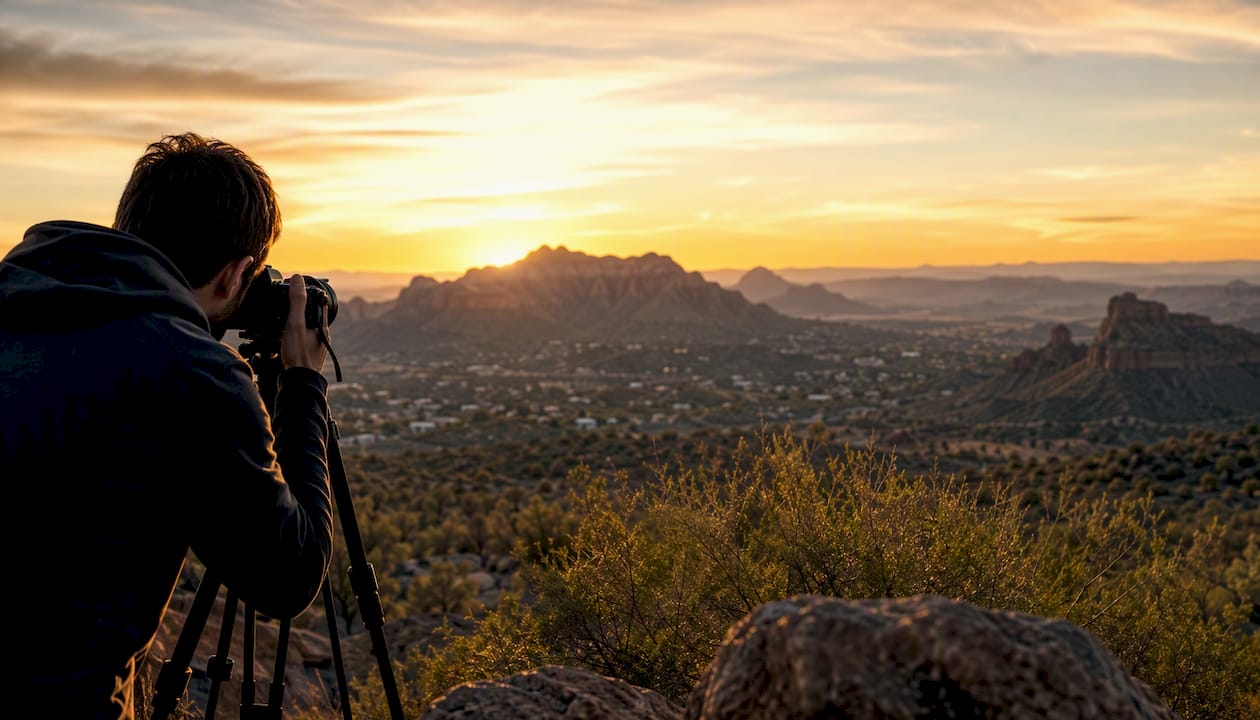
Arizona photography delivers iconic red-rock landscapes, slot-canyon light beams, desert silhouettes, and some of the darkest night skies in the country, backed by an active statewide network of clubs, workshops, and juried shows. If you want a starting shortlist right now, prioritize the Grand Canyon , Antelope Canyon , Horseshoe Bend , Sedona , Saguaro National Park , Monument Valley , The Wave and White Pocket in the Vermilion Cliffs region, and Petrified Forest National Park . Every one of those sites comes with its own access rules, and that’s where most first-time visitors get tripped up.
Before you pack the car, know two things. First, permit requirements in Arizona are split across federal, state, county, and tribal jurisdictions, meaning the rule that applies at Saguaro National Park won’t apply at Antelope Canyon or on Navajo tribal land. Second, you don’t have to figure this out alone. Groups like the Arizona Professional Photographers Association(AzPPA), the Arizona Photography Alliance (AZPA), and the Arizona Camera Club Council (ACCC) exist specifically to help photographers navigate locations, gear, and business practices together.
Here’s the starter list to bookmark before you read further:
- Grand Canyon (South Rim and Toroweap) for scale and sweeping vistas
- Antelope Canyon for light beams and sculpted sandstone
- Horseshoe Bend for the classic overlook shot
- Sedona (Cathedral Rock, Devil’s Bridge, Airport Mesa, Oak Creek Canyon) for red rock and forest contrast
- Saguaro National Park for desert silhouettes and cactus-studded sunsets
- Monument Valley for the archetypal Southwest skyline
- The Wave and White Pocket for otherworldly rock patterns
- Petrified Forest National Park for color-banded badlands and ancient wood
Pro Tip: Save every location above into a mapping app before your trip, and note which ones require a high-clearance vehicle. White Pocket, in particular, is not reachable by a standard sedan.
Key Takeaways
Successful Arizona photography depends on matching the right location to the right season and light, then confirming the specific permit rules for that land’s jurisdiction before you go.
| Point | Details |
|---|---|
| Choose location by season | Match Antelope Canyon’s beam season, Sedona’s cooler months, and monsoon-driven cloud drama to your travel dates. |
| Confirm jurisdiction first | Check whether NPS, county, state park, or tribal rules apply before assuming any location is permit-free. |
| Pack for the terrain | Bring a high-clearance 4WD for White Pocket or Toroweap, plus dust protection and extra water. |
| Build in weather backups | Monsoon storms and flash-flood risk can shut down slot canyons with little warning, so plan alternate days. |
| Tap local expertise | Groups like AzPPA and AZPA, plus guided tours, shortcut both scouting and permit headaches. |
| Hire local for complex shoots | JFPhotos handles Arizona location scouting and permit coordination for weddings and events across Phoenix, Scottsdale, and Flagstaff. |
Table of Contents
- Where Should You Shoot AZ Photography by Region?
- When Is the Best Time to Photograph in Arizona?
- Do You Need a Permit to Photograph in Arizona?
- Where Can You Find Arizona Photography Clubs and Workshops?
- What Gear Do You Need for Arizona Photography?
- What Are Some Sample Arizona Photography Itineraries?
- An Editor’s Take on Chasing the Obvious Shot
- Book a Professional for Your Arizona Location Shoot
- Sources
Where Should You Shoot AZ Photography by Region?
Arizona breaks into distinct photography regions, and each one rewards a different kind of planning. Treat this as your working map, not a bucket list to rush through in one trip.
1. Northern Arizona: Page and canyon country. Antelope Canyon is the headline act here, split into Upper and Lower sections, both accessible only through guided tours since the land sits on Navajo Nation property. Upper Antelope produces the famous midday beams from roughly April through September, while Lower Antelope rewards photographers who prefer texture and shadow over dramatic shafts of light. Horseshoe Bend, a short drive away, is paved-access and free to visit, though the overlook gets crowded fast after sunrise.
2. Grand Canyon and its rims. The South Rim is the most accessible, with paved overlooks at Mather Point, Hopi Point, and Yavapai Point delivering strong sunrise and sunset color. Toroweap, on the North Rim’s remote western edge, demands a high-clearance 4WD vehicle and a multi-hour drive on unpaved roads, but it rewards you with a sheer 3,000-foot drop straight into the Colorado River, a composition you simply can’t get from the South Rim.
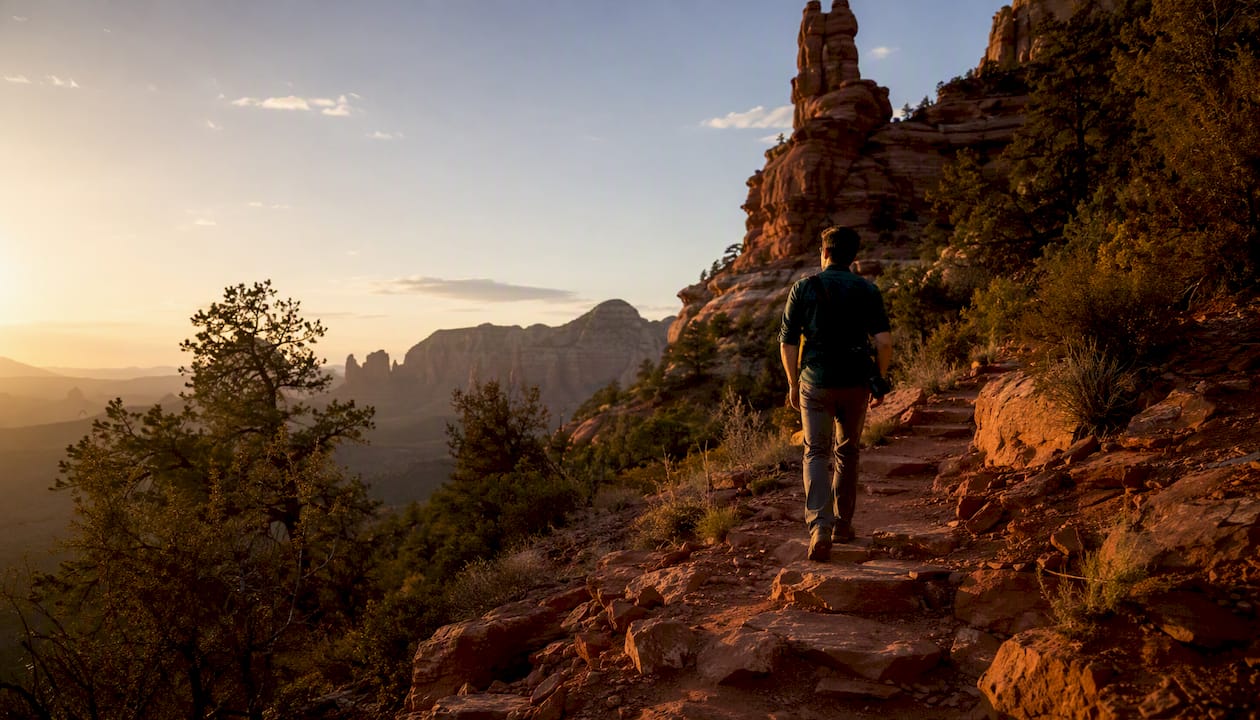
3. Sedona and the Verde Valley. Cathedral Rock, Devil’s Bridge, and Airport Mesa cluster closely together, which means you can realistically hit two or three in a single golden hour if you plan the drive order. Devil’s Bridge in particular gets best photographed before sunrise to beat the crowds that build steadily through the trail’s short but popular hike.
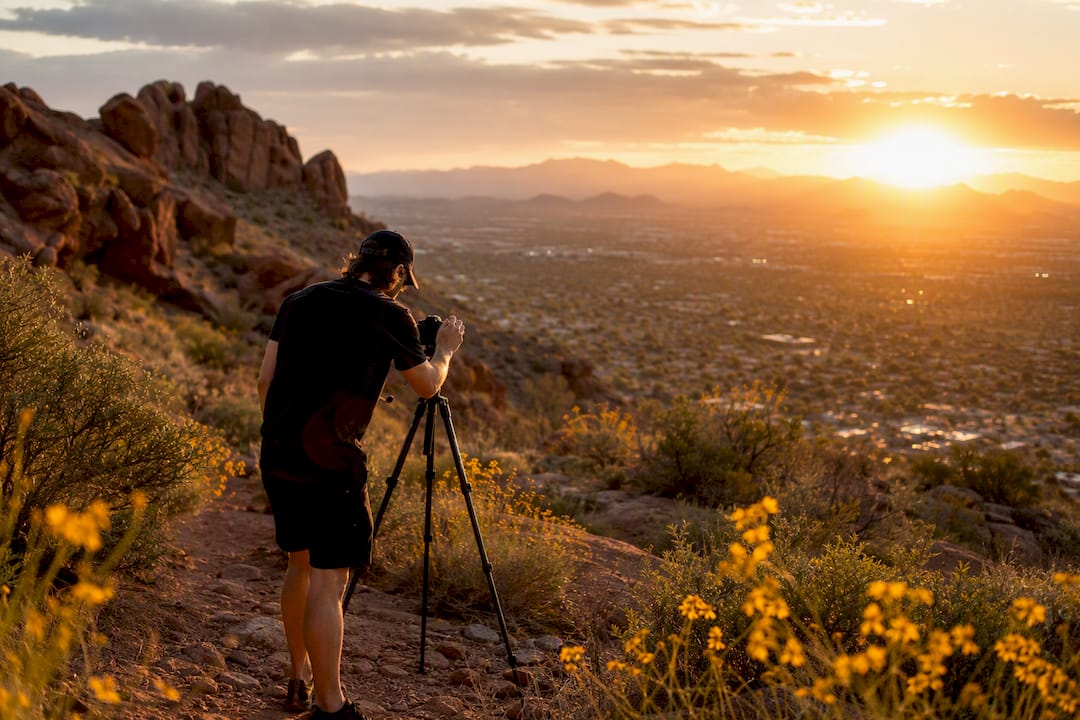
4. Southern Arizona and the Sonoran Desert. Saguaro National Park, split into east and west districts near Tucson, gives you the classic cactus silhouette against a setting sun. It’s paved and easy to access, which makes it one of the most forgiving locations on this list for a first Arizona shoot.
5. Vermilion Cliffs region: The Wave and White Pocket. The Wave requires a permit through a lottery system and a multi-mile hike across exposed terrain. White Pocket, its lesser-known neighbor, requires no lottery but does require a guided or high-clearance 4WD approach across deep sand roads.
6. Monument Valley and Navajo lands. The valley floor is Navajo Nation tribal land, and most photography beyond the main scenic drive requires a Navajo-permitted guide.
7. Petrified Forest and the Painted Desert. Paved roads run through the entire park, making it one of the easiest stops to add onto a Route 66 corridor trip, with striking color bands best captured in early morning or late afternoon light.
If you’re chasing something less photographed, look at Blue Canyon on Hopi land (guide required), Watson Lake near Prescott for reflection shots, and the lesser-visited Toroweap Overlook already mentioned above. These spots produce work that stands out precisely because fewer photographers have already covered the angle, a pattern confirmed by landscape photographers who find that overlooked locations often outperform the icons in gallery sales.
When Is the Best Time to Photograph in Arizona?
Timing determines whether your Arizona trip produces portfolio-quality images or forgettable snapshots, and the state’s light shifts dramatically by season and region. Spring and fall generally offer the most comfortable temperatures and the most reliable light conditions statewide, while summer brings both monsoon drama and serious heat risk.
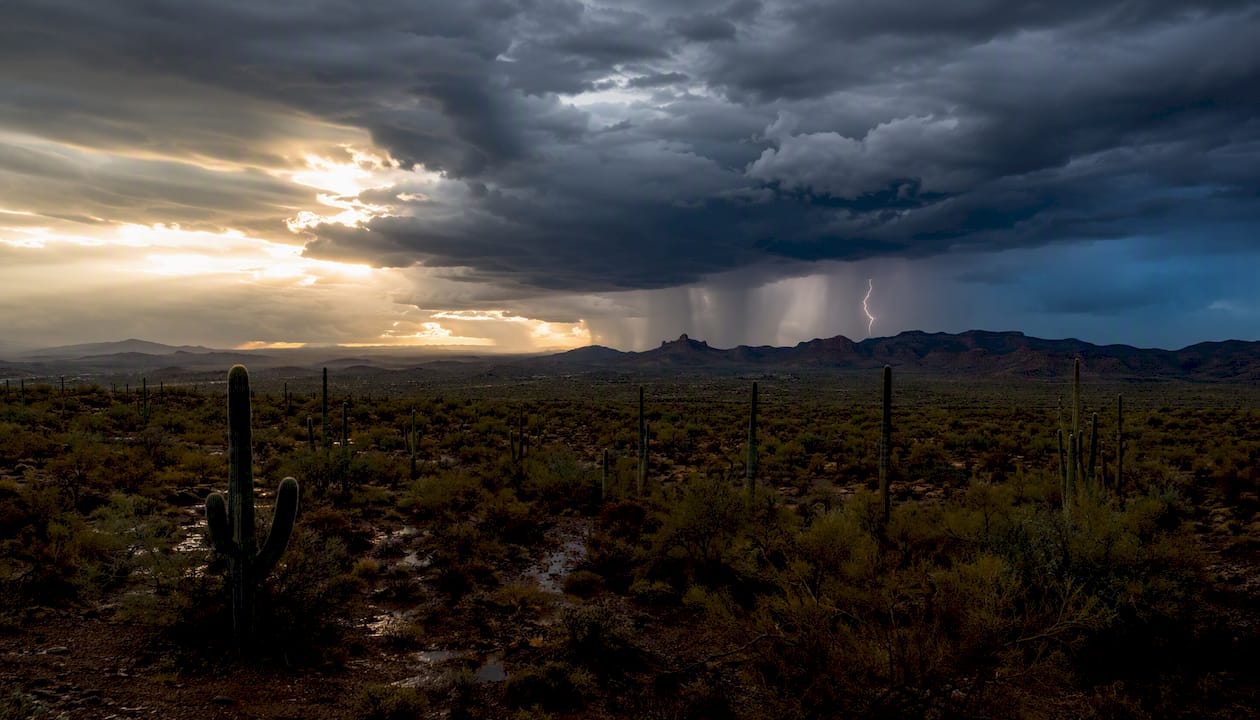
Spring, running roughly March through May, brings wildflower blooms in the Sonoran Desert and marks the opening of Antelope Canyon’s beam season. Fall, October and November, delivers cooler temperatures and some foliage color in the high country around Flagstaff and Sedona. Winter can surprise you with snow dusting the red rocks or even the Grand Canyon rim, a rare and striking combination worth chasing if your schedule allows flexibility. Summer’s monsoon season, July through September, produces the kind of towering cloud formations and lightning that landscape photographers travel across the country for, but it also brings flash-flood risk in narrow canyons.
| Region | Best season | Ideal time of day | Crowd or weather risk |
|---|---|---|---|
| Page / Antelope Canyon | Late spring through early fall | Midday for beams, sunrise for Horseshoe Bend | Heavy crowds; flash-flood risk during monsoon |
| Grand Canyon | Spring and fall | Sunrise and sunset | Crowded overlooks; winter road closures possible |
| Sedona | Fall through spring | Golden hour, pre-sunrise for Devil’s Bridge | Trail crowds build fast after sunrise |
| Saguaro National Park | Fall through spring | Sunset for silhouettes | Summer heat can be extreme |
| Vermilion Cliffs / White Pocket | Spring and fall | Full day; soft light preferred | Deep sand roads; no cell service |
| Monument Valley | Spring and fall | Sunrise and sunset | Guide required for most compositions |
| Petrified Forest | Fall through spring | Early morning, late afternoon | Minimal crowding; extreme summer heat |
Pro Tip: If you’re booking an Antelope Canyon photography tour, ask specifically about tripod-permission slots. Some tour operators reserve dedicated photography tours with slower pacing and tripod access, which standard tourist tours don’t allow.
Do You Need a Permit to Photograph in Arizona?
Yes, in many cases, and the rules depend entirely on who manages the land you’re standing on. Arizona has no single statewide photography permit. Instead, permits are issued separately by the National Park Service, Arizona State Parks, individual counties, cities, and tribal governments, so the same camera setup can be permit-free in one park and require paperwork a few miles away.
At the federal level, the National Park Service applies a general standard: activities involving eight or fewer people using hand-carried equipment in public areas typically don’t need a permit, which covers most solo landscape photographers and small workshop groups. Larger groups, commercial shoots, or anyone using equipment beyond a handheld setup usually needs a permit, and that process can take around six weeks depending on the park.
The National Park Service specifies that filming, still photography, and audio recording involving eight or fewer individuals, and meeting other basic conditions, generally does not require a permit, while larger or more complex productions require permits, fees, and insurance.
County parks add another layer. Pima County requires prior authorization for any commercial photography on its park lands. Simple shoots use a short-form permit, complex productions need a Commercial Filming and Still Photography Special Use Permit, and while there’s no permit fee, you’ll need insurance and should apply at least 10 working days ahead of your shoot date.
Tribal lands operate under entirely separate authority. Photography inside Antelope Canyon or across most of Monument Valley requires a Navajo-permitted guide, and casual photography without one isn’t allowed regardless of group size. If your work touches Hopi or other tribal land, contact that nation’s permit office directly rather than assuming NPS rules apply.
Drone photography adds a federal layer on top of everything else. Commercial drone work anywhere in Arizona requires FAA Part 107 certification, and most parks require you to declare drone use separately on your permit application, since many federal lands ban recreational drone flights outright.
Here’s your safety checklist for the field:
- Carry at least one gallon of water per person per day, more in summer.
- Check the weather forecast for flash-flood watches before entering any slot canyon.
- Avoid slot canyons entirely during monsoon season if storms are forecast anywhere upstream, even miles away.
- Wear sun protection and plan shoots around the cooler hours of early morning and late afternoon.
- Tell someone your route and expected return time before heading into remote areas like White Pocket or Toroweap.
- Carry a paper map or downloaded offline map, since cell coverage disappears fast outside metro areas.
- Rent or bring a genuine high-clearance 4WD vehicle for any location that calls for one; a standard SUV often isn’t enough.
If the permit landscape feels like more coordination than you want to manage solo, hiring a local guide or booking a photography-specific tour solves most of it in one step. Guides at Antelope Canyon and other tribal sites already hold the required permissions, and a private guide elsewhere can secure tripod access and timing that a general tourist visit won’t get you. For Phoenix-area shoots that need permit coordination, JFPhotos has covered this ground before.
Where Can You Find Arizona Photography Clubs and Workshops?
Arizona’s photography community is more organized than most newcomers expect, with several statewide groups running regular meetings, juried shows, and workshops throughout the year.
- Arizona Professional Photographers Association (AzPPA) holds monthly meetings at the Ability360 Conference Center in Phoenix, the first Tuesday of each month from 6:00 PM to 9:00 PM, and first-time visitors attend free. Beyond meetings, AzPPA runs workshops and a state convention, with a strong emphasis on turning fieldwork into a sustainable business through education on color management and post-production.
- Arizona Photography Alliance (AZPA) focuses on fine-art photography through juried theme galleries and online exhibitions, some of which are open to non-members, giving newer photographers a path to exhibition experience without a membership commitment.
- Arizona Camera Club Council (ACCC) operates as a federation connecting local camera clubs across the state, a useful entry point if you want a smaller, more local group before committing to a statewide organization.
- Digital Imaging Group (DIG) runs in-person meetups with image-sharing sessions and member portfolio galleries, a solid option if you want regular peer feedback rather than formal competition.
Joining any of these groups is usually straightforward: show up to a posted meeting, check the group’s site for guest policies, and ask about upcoming juried calls if exhibition experience interests you. Clubs like these also double as informal scouting networks. Members who’ve already shot White Pocket or Toroweap can save you a wasted trip by telling you which access road actually holds up in current conditions.
Guided photography tours fill a different need. At Page, dedicated photography tours through Antelope Canyon offer slower pacing and tripod time that standard tourist tours skip entirely. Sedona has several photo-tour operators who time hikes to Cathedral Rock or Devil’s Bridge around sunrise, handling the crowd-avoidance logistics for you. A private local guide can also open doors at sites where general public access is restricted.
Pro Tip: Before you invest in a full workshop, attend one AzPPA or DIG meeting as a guest first. It’s the fastest way to learn which locations local photographers are actually shooting right now, not just which ones show up in generic travel guides. If you want your own work presentation-ready for a juried call or portfolio review, a clean online portfolio matters. Webtechs builds exactly that kind of local digital showcase for photographers who need one.
What Gear Do You Need for Arizona Photography?
Arizona’s terrain punishes underprepared gear choices, particularly dust in the deserts and sudden humidity spikes during monsoon season. Pack for the environment, not just the shot list.
Core kit for most Arizona trips:
- A wide-angle zoom (16-35mm equivalent) for slot canyons and sweeping desert vistas
- A midrange or telephoto zoom for compressing distant rock formations, especially at the Grand Canyon
- A sturdy tripod, essential for slot-canyon exposures and any astrophotography
- A circular polarizer to cut glare and deepen sky contrast on red rock
- Neutral-density and graduated ND filters for balancing bright skies against darker foregrounds
- Spare batteries, since cold desert mornings and heavy LCD use drain them faster than expected
- A dust-proof camera bag and lens-cleaning kit
- A rain cover, useful even in the desert once monsoon season arrives
Different subjects call for different technique. Inside a slot canyon like Antelope, meter for the walls rather than the beam itself, and set a custom white balance rather than trusting auto, since the reflected orange light will otherwise skew your entire exposure. For desert silhouettes at Saguaro, shoot directly into the setting sun and underexpose slightly to hold detail in the sky while letting the cactus go fully black. At the Grand Canyon, the dynamic range between a bright sky and a shadowed canyon floor often exceeds what a single exposure can hold, so bracket your shots and blend them in post if you want detail in both. For night and astro work at a dark-sky site like White Pocket or the Petrified Forest, a fast wide-angle lens, a high ISO your camera handles cleanly, and a 20 to 25 second shutter speed are the starting point before fine-tuning.
Dust is the quiet gear killer in Arizona. Change lenses inside your vehicle or a bag whenever possible, and never do it in wind. Batteries and electronics suffer in summer heat, so keep spares out of direct sun and consider a small insulated pouch. Back up your memory cards each night of a multi-day trip. A failed card after three days at White Pocket is a loss no reshoot can fix.
Pro Tip: Carry a rocket blower and a handful of microfiber cloths, and skip canned air in sandy environments. Canned air can push grit deeper into your camera’s mirror box instead of clearing it.
What Are Some Sample Arizona Photography Itineraries?
Plug-and-play itineraries save you the planning headache and help you avoid arriving at a location with the wrong light or an empty permit slot.
Sedona loop (1 to 2 days). Start pre-sunrise at Devil’s Bridge to beat the trail crowds, move to Cathedral Rock for late-morning light through the rock formations, then finish at Airport Mesa for sunset. All three sites sit close enough together that a standard vehicle handles the whole loop. Book any guided sunrise hike a few days ahead during peak fall and spring travel windows.
Page region day trip. Begin at Horseshoe Bend at sunrise, when the overlook is far less crowded than midday. Move to Antelope Canyon for a midday photography tour timed to the beam windows, booking your tour slot at least a few weeks ahead during peak season. If Antelope’s crowds or lottery timing don’t work for your schedule, White Pocket makes a strong alternative, though it requires a high-clearance 4WD vehicle and a full day given the remote sand-road approach.
Grand Canyon short visit or Toroweap overnight. A South Rim day trip works well with sunrise at Yavapai Point and sunset at Hopi Point, both paved and easily reached. For a more ambitious trip, a Toroweap overnight requires a high-clearance vehicle, several hours of unpaved driving, and a backcountry permit for camping, but it delivers a Grand Canyon composition almost no one else has.
- Fuel up before any drive toward White Pocket, Toroweap, or Monument Valley. Gas stations thin out fast once you leave the highway corridor.
- Expect no cell coverage across most of the Vermilion Cliffs region and much of the Navajo Nation backcountry.
- Book photography-specific tours at Antelope Canyon at least two to three weeks ahead during spring and summer beam season.
- Keep a backup indoor or lower-elevation location in mind for any day when monsoon storms roll in unexpectedly.
An Editor’s Take on Chasing the Obvious Shot
Most first-time Arizona photographers build their whole trip around the five or six images they’ve already seen a thousand times online: the Horseshoe Bend overlook, the Antelope Canyon beam, the Cathedral Rock reflection. There’s nothing wrong with shooting those, and honestly, you should. But the photographers who build a lasting body of work in this state are usually the ones who treat the icons as a warm-up, not the whole trip.
The gap between a postcard shot and a genuinely memorable image in Arizona almost always comes down to timing and restraint. Anyone can stand at Horseshoe Bend at 7 AM with fifty other tripods. Fewer people will drive the extra hour to Toroweap, or spend a full day getting to White Pocket for light that might not even cooperate. That’s precisely why those images stand out. Overlooked terrain rewards patience in a way the crowded overlooks simply can’t anymore, because everyone’s already made the obvious version of that shot.
I’d also push back gently on the idea that a great Arizona portfolio can be built entirely from a weekend trip with a phone GPS and a shot list pulled from someone else’s Instagram grid. The permit landscape here is genuinely fragmented, tribal land etiquette matters, and the desert doesn’t forgive poor planning on water or vehicle choice. Treat the local clubs and guides as part of your gear list, not an afterthought. The photographers who’ve already made the mistakes are usually happy to help you skip them.
If you’re building toward commissioned or gallery-level work, that same instinct, mixing the icon with the overlooked site, tends to produce a stronger overall body of work than chasing only what’s already been photographed a million times. Portrait and location work benefits from the same principle: the unexpected background often outperforms the obvious one.
Book a Professional for Your Arizona Location Shoot
Planning your own Arizona photography trip is rewarding, but if you’re arranging a wedding, engagement session, or event around one of these locations, permit paperwork and location scouting can eat into time you’d rather spend actually enjoying the day. JFPhotos handles that coordination directly, so you show up to a location that’s already scouted and permitted instead of discovering a permit requirement the morning of your shoot.
JFPhotos brings over a decade of on-location experience across Arizona’s terrain, covering weddings, events, portraits, and commercial work with the kind of practical know-how that comes from actually shooting slot canyons and desert backdrops, not just reading about them. Coverage extends across Phoenix, Scottsdale, and Flagstaff, with location scouting and permit facilitation built into the planning process for shoots that need it. If red rock, desert silhouettes, or a specific Arizona backdrop is part of your wedding or event vision, start with a look at JFPhotos’ wedding photography services and reach out to talk through the location and logistics for your date.
Sources
Confirm current dates, fees, and permit lead times directly with these sources before finalizing any Arizona photography trip. Rules and fee schedules change, and the agencies below are the authoritative word on their own jurisdiction.
Always confirm fees, lead times, and any recent rule changes directly with the listed agency before you finalize travel plans, since permit conditions can shift season to season.
Recommended
Recent Posts