

Bridal Session Photos: Your Complete Planning Guide
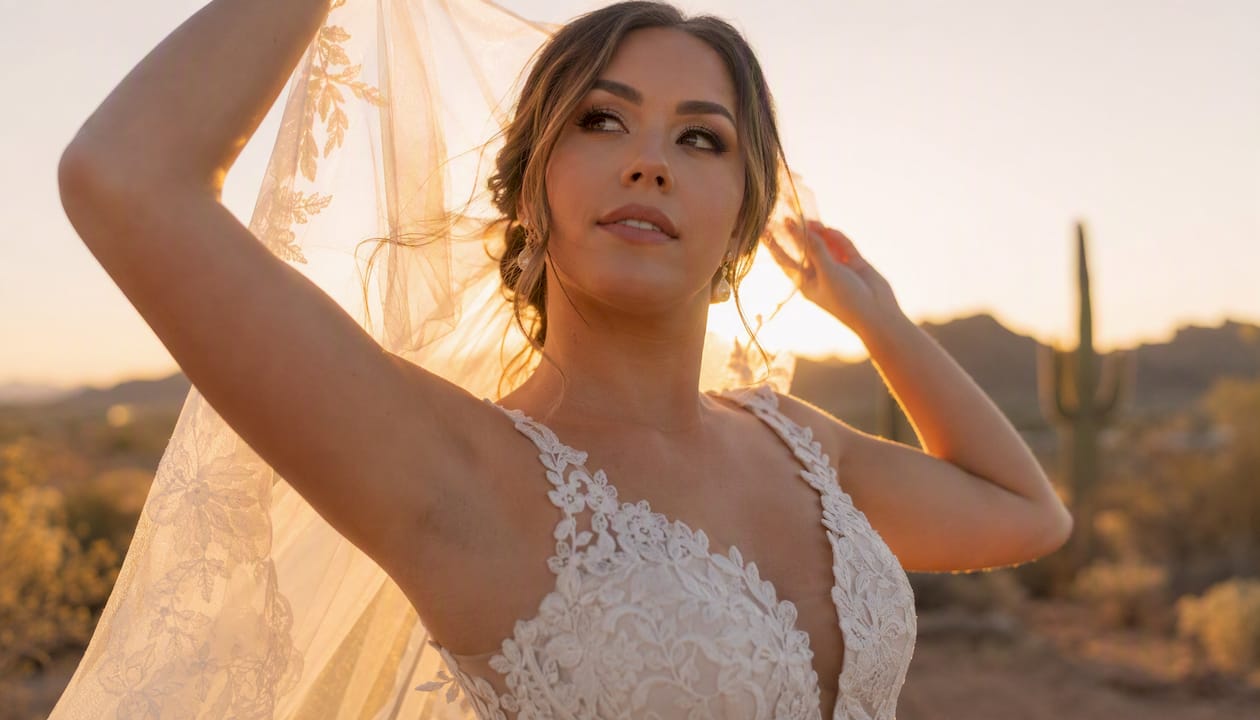
A bridal session, also called a bridal portrait, is a dedicated pre-wedding photo shoot where you wear your full wedding attire before the big day. Most brides should seriously consider booking one. It functions as a dress rehearsal, a hair and makeup trial on camera, and a source of heirloom portraits you can display at your reception or give as gifts.
You’ll benefit most from a bridal session if you:
- Want relaxed, unhurried portraits without the time pressure of your wedding day
- Need to confirm your hair, makeup, and gown work together on camera before committing to them
- Plan to display a large portrait at your reception or create framed gifts for family
Schedule your session 4–8 weeks before the wedding so you still have time for final alterations and print orders. The typical deliverable is a fully edited online gallery with print rights, usually returned within 6–12 weeks of the shoot date.
Key Takeaways
A bridal session scheduled 4–8 weeks before the wedding gives you time for final alterations, a real hair and makeup trial on camera, and prints ready for reception display.
| Point | Details |
|---|---|
| Ideal booking window | Schedule your bridal session 4–8 weeks before the wedding for alterations, trials, and print orders. |
| Session length | A 60-minute session covers one to two looks; 90 minutes allows two to three looks and a location change. |
| Hair and makeup trial | Use the session as a live camera trial so you can adjust your look before the wedding day. |
| Bring a shot list | Share a priority-labeled shot list with your photographer to protect must-have images. |
| JFPhotos bridal sessions | JFPhotos offers tailored bridal sessions in Phoenix and across Arizona, with full print rights and gallery delivery. |
Table of Contents
- What are bridal session photos, and what types can you book?
- Why schedule a bridal session before your wedding?
- When should you book your bridal session, and how long does it take?
- What to wear and how to plan looks for your bridal portrait session
- Hair and makeup guidance for your bridal session
- Location ideas and posing prompts for your bridal portraits
- Sample shot list and session timeline for a 60–90 minute bridal session
- How much do bridal sessions cost, and what’s included?
- Practical preparation checklist for your bridal session day
- Questions to ask your photographer before booking a bridal session
- JFPhotos professional tips for getting the most from your bridal session
- A note from behind the camera
- Your bridal session, handled by JFPhotos
- Sources
What are bridal session photos, and what types can you book?
A bridal portrait session is a dedicated shoot focused entirely on you in your wedding look, separate from the wedding day itself. Brides as a pre-wedding shoot that captures the bride in full attire and serves as both a hair and makeup trial and a source of curated heirloom images. The industry term is “bridal portrait,” though photographers use “bridal session” and “bridal shoot” interchangeably.
The Knot notes that these sessions are flexible by design. They can happen weeks before the wedding, on the morning of the wedding day, or even after the ceremony for destination imagery. That flexibility means you can personalize the session to match your aesthetic rather than follow a rigid traditional format.
Common session types:
- Traditional bridal portrait. You wear your full gown and veil in a classic setting, often a studio or formal garden. These images are typically framed and displayed at the reception or given as gifts to parents.
- Styled/editorial session. A more creative, fashion-forward approach with intentional backdrops, props, and lighting setups. Think of it as a magazine shoot built around your wedding look. See what a styled wedding shoot involves for a deeper breakdown of this format.
- Bridal boudoir. An intimate, private session focused on confidence and femininity, usually in lingerie or a robe rather than the full gown. Often given as a gift to the partner before the wedding.
- Trash the dress. A post-wedding session where you wear the gown in an unconventional setting, such as a beach, a field, or an urban environment, with no concern for keeping the dress pristine. Best scheduled after the wedding.
- Same-day bridal portraits. A short session on the wedding morning, before the ceremony, while hair and makeup are fresh. These work well when you want a few polished solo portraits without a separate booking.
Each type serves a different purpose. Traditional and editorial sessions produce the most versatile gallery for reception displays and gifts. Boudoir and trash-the-dress sessions are personal keepsakes. Same-day portraits are a practical option when your schedule or budget doesn’t allow a separate session date.
Why schedule a bridal session before your wedding?
The practical case for a bridal session is stronger than most brides expect. Wedding days move fast. Between the ceremony, cocktail hour, and reception, solo portrait time often gets compressed to 15–20 minutes. A dedicated bridal session gives you an hour or more with no timeline pressure.
Four concrete benefits:
- Dress rehearsal. You’ll see exactly how the hem moves, whether the bustle holds, and how the veil photographs in different light. If something needs adjusting, you have weeks to fix it before the wedding.
- Hair and makeup trial on camera. What looks great in a mirror doesn’t always translate to photographs. A bridal session lets you test the full look under real shooting conditions and make changes while there’s still time. The Knot recommends using the session specifically for this purpose, confirming the hair and makeup combination and trying small variations to see what photographs best.
- Heirloom portraits for display and gifts. Many brides use bridal portraits as a surprise reveal at the reception, displayed on an easel near the entrance. Canvas prints and framed portraits also make meaningful gifts for parents and grandparents.
- Confidence and posing practice. Knowing how to stand, where to look, and how to move in your gown takes practice. A bridal session lets you get comfortable in front of the camera so you arrive at your wedding day already knowing your best angles.
CB Studio Photography describes bridal sessions as a calm, curated experience that produces more intentional, editorial images than most brides get on the wedding day itself. That creative space is worth the investment on its own.
When should you book your bridal session, and how long does it take?
The recommended booking window is 4–8 weeks before the wedding. That window gives you time to complete final dress alterations before the shoot, use the session as a live hair and makeup trial, and still order prints in time for reception display. Booking earlier than eight weeks risks shooting before the gown fits perfectly. Booking later than four weeks leaves little room for print orders or last-minute styling adjustments.
Typical session lengths and what each realistically covers:
- 45 minutes. One look, one location, roughly 20–30 delivered images. Good for brides who want a few polished portraits without a full production.
- 60 minutes. One to two looks, one location with minor setup changes, roughly 30–50 delivered images. The most common choice for a standalone bridal session.
- 90 minutes. Two to three looks, one or two locations, roughly 50–80 delivered images. Allows for a veil-on and veil-off variation, a wardrobe change, and more creative posing time.
- 120 minutes. Three or more looks, multiple locations, 80+ delivered images. Best for brides who want a full editorial gallery or plan to use images for both reception display and personal keepsakes.
Pro Tip: Book your session for a weekday morning if possible. Locations are less crowded, golden-hour light arrives earlier, and photographers often have more flexibility to extend the session if things are going well.
What to wear and how to plan looks for your bridal portrait session
Your wedding gown is the obvious centerpiece, but the most memorable bridal sessions usually include at least one intentional variation. That might mean removing the veil for a softer look, switching to a second dress, or adding a bold accessory that changes the mood entirely.
Dress and outfit choices:
- Wear your full wedding gown with veil for the primary look. This is the image most likely to be framed or displayed.
- Consider a second outfit if your session is 90 minutes or longer. A floral midi dress, a lace slip, or a tailored suit in a complementary color gives the gallery variety and makes the images feel less repetitive.
- If you’re wearing a cathedral veil, plan at least one set of shots with it spread behind you and one with it removed. The two looks photograph very differently.
Accessories and styling items to bring:
- Shoes (both your wedding heels and a comfortable flat for walking between setups)
- Veil, hairpiece, and any backup bobby pins or hair ties
- Jewelry: earrings, necklace, bracelet, and your engagement ring (cleaned the night before)
- Bouquet or a stand-in bouquet from your florist if the real one isn’t ready yet
- A small clutch or purse if it’s part of your wedding-day look
Outfit change logistics:
A single outfit change in a 90-minute session is realistic. Two changes in a 120-minute session are possible but tight. Bring a trusted helper who knows how to work your bustle and zipper. Practice the change at home at least once before the session so you’re not losing 20 minutes figuring out buttons under pressure.
What to avoid:
- Fabrics that wrinkle badly in transit (pack the gown in a garment bag and hang it immediately on arrival)
- Clingy undergarments that create visible lines under the gown
- Highly reflective statement jewelry that can create hot spots in flash photography
Pro Tip: Plan one look that’s intentionally different from your wedding-day styling. If your wedding look is classic and formal, bring a more relaxed, natural variation for the session. That contrast gives you a wider range of images and often produces the most personal portraits of the day.
Hair and makeup guidance for your bridal session
Your bridal session is the best possible hair and makeup trial you can do, because it tests the full look under real shooting conditions rather than just in a mirror. Schedule your hair and makeup artist for the session the same way you would for the wedding day: same timing, same products, same techniques. That way the session functions as a genuine dress rehearsal for your glam team, not just for you.
When to book the trial:
Book your hair and makeup artist for the bridal session at least 6–8 weeks before the wedding. This gives you time to review the photos, request adjustments, and do a second trial if needed before the wedding day.
Touch-up kit to bring:
- Lip stain or lipstick in your wedding-day shade
- Translucent setting powder and a small brush
- Bobby pins and clear hair elastics
- Travel-size setting spray (like Urban Decay All Nighter or a comparable product)
- Blotting papers for outdoor sessions in warm weather
- A small mirror
Camera-friendly makeup dos and don’ts:
- Use matte or satin finishes on foundation and concealer. Dewy formulas can look oily under direct light or flash.
- Add slightly more eye definition than you would for everyday wear. Eyes tend to recede in photographs, especially outdoors.
- Avoid SPF-heavy moisturizers or foundations with high SPF content. Many SPF ingredients cause a white cast under flash photography that’s difficult to correct in editing.
- Waterproof mascara is non-negotiable. Even if you don’t plan to cry, outdoor heat and humidity can cause smearing.
After the session, review the images with your artist before the wedding. Look specifically at how the lip color reads on camera, whether the eye makeup has enough definition, and whether the skin finish looks polished rather than flat or shiny. Small adjustments at this stage are far easier than discovering an issue on your wedding morning.
Location ideas and posing prompts for your bridal portraits
The right location does a lot of the creative work for you. A strong backdrop gives the images context and mood without requiring elaborate props or setups.
Location categories and when each works best:
- Studio. Full lighting control, no weather risk, ideal for traditional and editorial portraits. Best when you want a clean, timeless look or when outdoor conditions are unreliable.
- Venue on-site. Shooting at your actual wedding venue creates visual continuity between your bridal portraits and your wedding-day images. It also helps guests recognize the setting during the reception display.
- Garden or park. Lush greenery, natural light, and textured backgrounds. Works well for romantic, soft-focus portraits. Avoid midday sun, which creates harsh shadows under the eyes and chin.
- Urban streets. Brick walls, archways, and city architecture give editorial sessions a fashion-forward edge. Best in the early morning before foot traffic builds.
- Desert or scenic backdrops. For Arizona brides, saguaro-studded desert landscapes, red rock formations, and wide open skies create portraits that are impossible to replicate anywhere else. Golden hour in the desert is particularly striking.
Time-of-day lighting:
Golden hour, the 45–60 minutes after sunrise or before sunset, produces warm, directional light that flatters skin tones and adds depth to gown textures. If golden hour isn’t possible, look for open shade: a north-facing wall, a tree canopy, or the shadow side of a building. Open shade gives even, diffused light without the harsh contrast of direct midday sun.
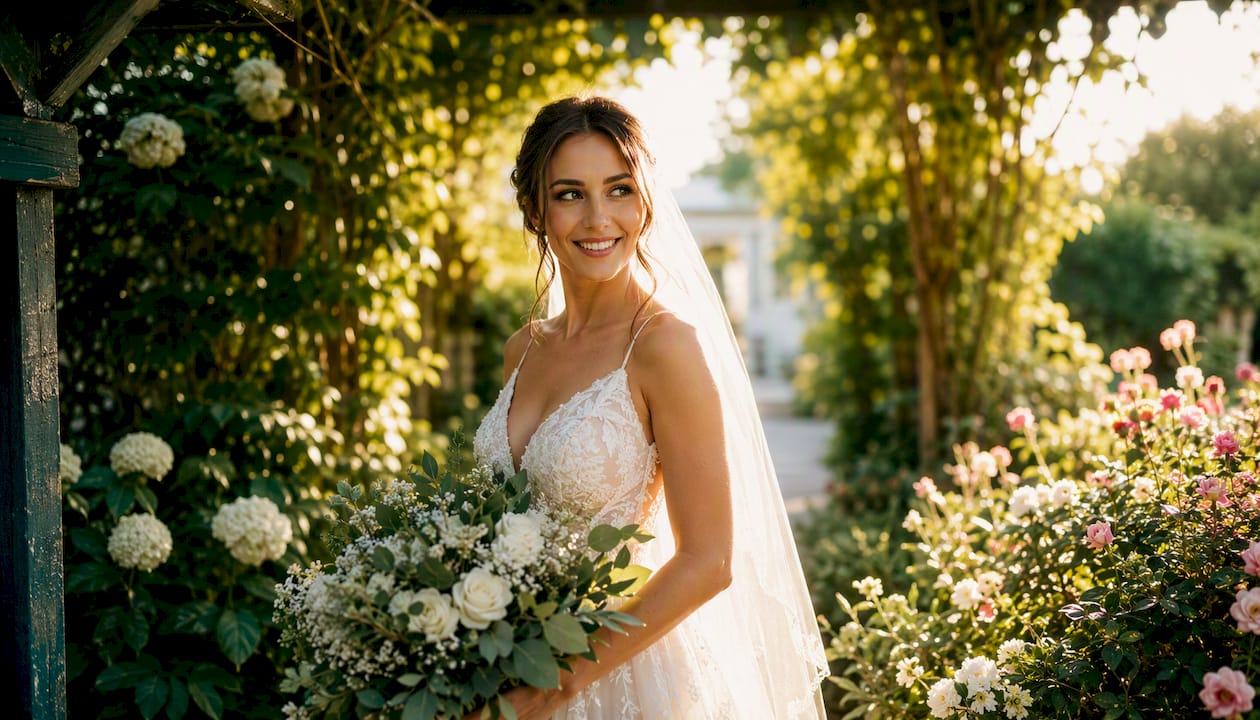
Pro Tip: Scout your outdoor location at the same time of day as your planned session. Light changes dramatically between 8 AM and 10 AM, and a spot that looks perfect at noon can be completely backlit by 5 PM.
15 posing prompts to share with your photographer:
- Walk slowly toward the camera, looking down at your bouquet
- Walk away from the camera and glance back over one shoulder
- Stand facing away, veil spread wide behind you
- Seated on steps or a low wall, gown fanned out around you
- Hold the bouquet near your chin and look slightly off-camera
- Lift the front of the skirt slightly and look down at it
- Lean against a wall or door frame, one hand resting lightly on the surface
- Spin slowly in place while the photographer shoots from a low angle
- Hold the veil out to one side with both hands, face turned toward the light
- Close-up of hands holding the bouquet, ring visible
- Seated cross-legged on the ground, gown pooled around you, looking directly at the camera
- Standing in a doorway or archway, framed by the architecture
- Walking through tall grass or wildflowers, looking forward
- Candid laugh or genuine smile, eyes slightly off-camera
- Detail shot: shoes, ring, veil edge, or a meaningful accessory
Props and mood:
A real or stand-in bouquet is the most versatile prop you can bring. It gives your hands a natural resting place and adds color and texture to every frame. An heirloom piece, such as a grandmother’s brooch or a family Bible, adds personal meaning. Pets work well for relaxed, candid portraits but require extra time and a handler.
Sample shot list and session timeline for a 60–90 minute bridal session
Sharing a shot list with your photographer before the session is one of the most practical things you can do. It ensures priority images are captured first, before light shifts or energy fades.
Must-have shots
- Full-length portrait, front-facing, gown and veil
- Full-length portrait, back-facing, veil spread
- Three-quarter length, looking toward the light
- Close-up portrait, face and shoulders
- Detail: hands holding bouquet, ring visible
- Detail: shoes
- Detail: veil edge or train
- Walking shot, candid movement
- Seated portrait, gown arranged
- One genuine laugh or candid expression
Nice-to-have shots
- Veil movement shot (toss or wind-catch)
- Looking down at bouquet, soft expression
- Silhouette against a window or open sky
- Wide environmental shot showing the full location
- Second outfit or veil-off variation
60-minute session timeline
- 0:00–0:10 Arrive, steam gown, final touch-ups, review shot list with photographer
- 0:10–0:30 Must-have full-length and three-quarter portraits at primary location
- 0:30–0:45 Detail shots, close-up portraits, candid movement shots
- 0:45–0:55 Nice-to-have shots and any creative variations
- 0:55–1:00 Buffer for final selects and any missed shots
90-minute session timeline
- 0:00–0:10 Arrive, steam gown, final touch-ups, review shot list
- 0:10–0:35 Must-have portraits at primary location, first look
- 0:35–0:50 Detail shots, close-ups, candid movement
- 0:50–1:05 Outfit change or veil-off variation at same location or short travel to second spot
- 1:05–1:20 Nice-to-have shots and creative variations at second location
- 1:20–1:30 Buffer and final selects
Adapting for weather or travel: If you’re moving between two locations, build at least 10–15 minutes of travel time into the timeline. For outdoor sessions, identify a shaded backup spot in advance in case direct sun becomes a problem. If weather forces a location change, prioritize must-have shots first and treat nice-to-haves as a bonus.
How much do bridal sessions cost, and what’s included?
Bridal portrait sessions are typically priced as a standalone add-on to a wedding photography package or as a separate booking. Costs vary by region, photographer experience, and what’s included, but Paperlust’s photographer cost guide provides a useful framework for understanding package tiers.
| Package Tier | Typical Price Range | Common Inclusions |
|---|---|---|
| Budget | $300–$500 | 1 hour, 20–30 edited images, online gallery |
| Mid-range | $600–$1,000 | 1–2 hours, 30–50 edited images, online gallery, print rights |
| Premium | $1,200–$2,000 | 2+ hours, 50–80+ edited images, gallery, print rights, one print product |
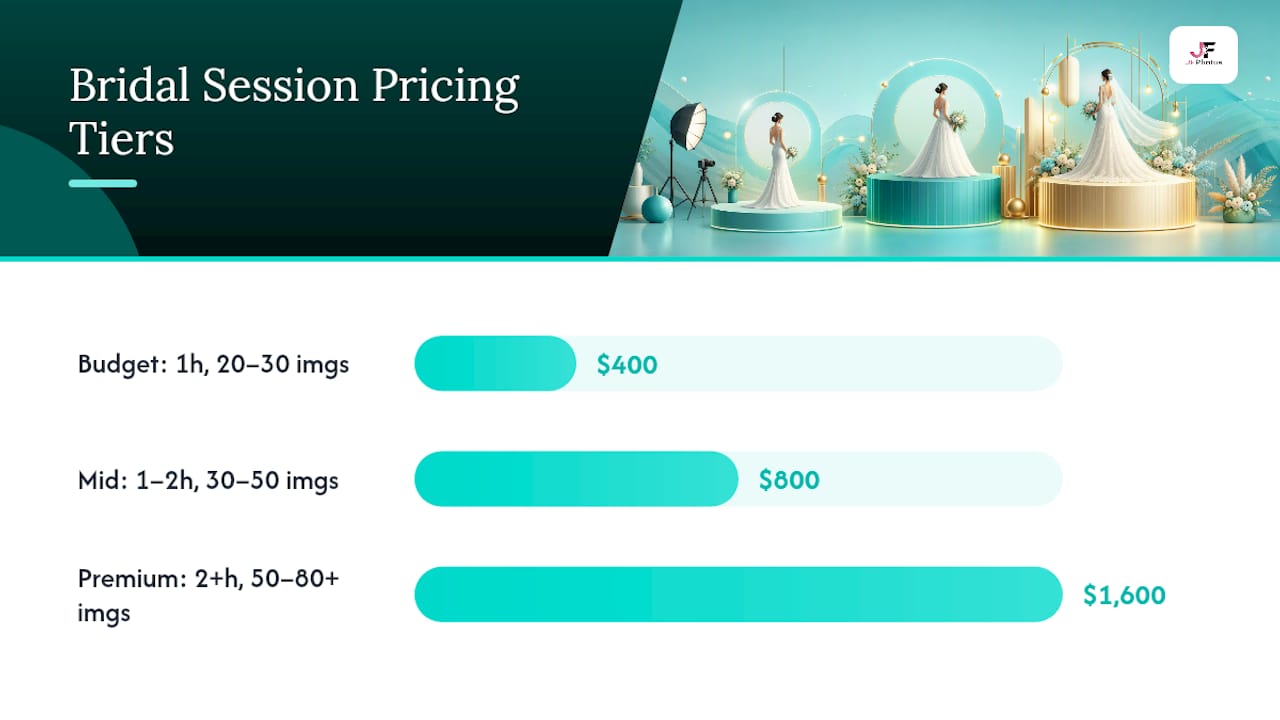
These ranges reflect standalone bridal session pricing. When a bridal session is bundled into a full wedding photography package, the add-on cost is often lower than booking it separately.
The Knot’s Real Weddings Study reports an average wedding photographer cost of around $3,000, though regional differences and wedding size affect that figure significantly. Zola’s wedding cost index places photography in the mid-thousands nationally, with coverage hours and service level driving cost more than guest count alone.
Common add-ons and typical price ranges:
- Second shooter: $300–$700 as an add-on. For a bridal session, a second shooter gives you simultaneous wide and close-up angles. Learn more about what a second shooter adds to coverage.
- Rush editing: $200–$500 for a faster turnaround than the standard 6–12 week window.
- Travel fee: Varies by distance. Confirm in the contract whether travel to a specific location is included or billed separately.
- Print products: Albums start around $500; individual prints and canvases vary by size and lab.
Contract language to confirm: Ask specifically whether the quoted price includes full print rights, how many final edited images are delivered, and what the turnaround time is. Standard full-gallery delivery runs 6–12 weeks, with many photographers providing a preview of 20–30 images within the first week.
Practical preparation checklist for your bridal session day
Arriving prepared makes a measurable difference in how the session flows and how the images turn out. Use this checklist to pack and plan.
Pre-session checklist (complete 1–2 days before):
- Gown steamed and hung in a garment bag
- Engagement ring cleaned (a soft toothbrush and warm soapy water works well)
- Shoes wiped clean and broken in enough to walk comfortably
- Shot list printed or saved to your phone to share with the photographer
- Touch-up kit assembled (lip color, powder, bobby pins, setting spray, blotting papers)
- Confirm helper is available for outfit changes and bustle assistance
- Confirm location, parking, and arrival time with the photographer
Session-day checklist:
- Eat a real meal and bring a water bottle. Sessions are more physically demanding than most brides expect.
- Pack a small snack (something that won’t stain) for longer sessions
- Bring comfortable flat shoes to wear between setups
- Lint roller and a small steamer or wrinkle-release spray
- Garment bag for transporting the gown safely
Mini emergency kit:
- Clear nail polish (for stocking runs or loose threads)
- Double-sided fashion tape (for neckline gaps or hem adjustments)
- Small sewing kit with thread in your gown’s color
- Pain reliever (heels are beautiful; they are also uncomfortable after an hour)
- Stain remover pen for any last-minute fabric emergencies
Questions to ask your photographer before booking a bridal session
A clear conversation before you sign a contract prevents most of the surprises brides encounter after the session. Choosing the right photographer starts with knowing exactly what questions to ask.
Consultation questions:
- How many final edited images are included, and what’s the selection process?
- Do I receive full print rights, or are there restrictions on where and how I can print?
- What’s your standard turnaround time for the full gallery?
- Do you offer a preview gallery, and how soon after the session?
- What happens if we need to reschedule due to weather or illness?
- Is travel to my chosen location included, or is there an additional fee?
- Do you offer a second shooter for bridal sessions?
Deliverables to confirm in writing:
- File format (high-resolution JPEGs are standard; RAW files are rarely included)
- Gallery access duration (how long the online gallery stays active)
- Print rights scope (personal use only vs. unlimited personal printing)
- Number of edited images delivered
Contract checklist:
- Cancellation and reschedule policy with specific notice requirements
- Travel fee structure and which locations trigger additional charges
- Model release or usage rights (whether the photographer can use your images for marketing)
- Turnaround time stated as a specific number of weeks, not “as soon as possible”
- Retouching scope: what’s included in standard editing vs. what costs extra
For additional guidance on aligning style and deliverables, this resource on choosing a wedding photographer covers the key questions in detail.
JFPhotos professional tips for getting the most from your bridal session
With over a decade of wedding and portrait photography experience, the team at JFPhotos has photographed hundreds of bridal sessions across Arizona’s diverse locations, from desert landscapes and saguaro-lined trails to urban Phoenix streets and formal studio setups. A few things consistently separate the sessions that produce extraordinary images from the ones that feel rushed or flat.
Lighting and location:
- Arrive 15 minutes early to walk the location with your photographer before shooting starts. Identifying the best light direction and background takes a few minutes but shapes every frame that follows.
- For outdoor sessions in Arizona, late afternoon light between 4 PM and sunset is particularly striking. The warm tones complement both light and dark gown colors, and the desert backdrop adds depth that studio setups can’t replicate.
Getting natural expressions:
- The most flattering portraits rarely come from holding a static pose. Movement produces better images. Walk, turn, adjust your veil, look away and then back. The frames captured mid-movement are often the strongest selects.
- When you feel yourself tensing up, take a slow breath and drop your shoulders. Tension reads clearly in photographs, especially around the jaw and hands.
Photographer-directed prompts that reliably work:
- “Look at your bouquet like you’re seeing it for the first time.” This produces a soft, downward gaze that photographs beautifully.
- “Walk toward me like you’re late for something.” Natural stride, real movement, no stiffness.
- “Think about the moment you said yes.” Genuine emotion, no forced smile required.
Pro Tip: Bring a trusted friend or your maid of honor to the session. Having a familiar face nearby helps you relax, and they can assist with veil adjustments, bustle fixes, and keeping the energy light between setups.
JFPhotos’s wedding photography portfolio shows the range of styles and locations we work with, from traditional studio portraits to editorial desert sessions.
A note from behind the camera
The brides who get the most from their bridal sessions are the ones who treat it as a creative day for themselves, not just a task on the wedding planning list. When you arrive prepared, with a shot list, a trusted helper, and a clear idea of the looks you want, the session becomes genuinely enjoyable rather than stressful.
One thing worth doing before you arrive: spend five minutes the night before looking at your shot list and picturing each image. Not rehearsing poses in a mirror, just visualizing the moments. Brides who do this tend to move more naturally and feel more present during the session. That presence shows up in every frame.
Your bridal session, handled by JFPhotos
JFPhotos brings more than a decade of wedding and portrait photography experience to every bridal session in Phoenix and across Arizona. Our bridal sessions are designed to give you the portraits you actually want: unhurried, beautifully lit, and tailored to your gown, your location, and your vision.
A typical JFPhotos bridal session includes one to two hours of shooting time, a fully edited online gallery with print rights, and the option to add a second shooter or rush editing. We work across Arizona’s most striking locations, from Scottsdale’s desert trails to Phoenix’s urban architecture, and we’re equally comfortable in a studio setup when you want full lighting control. With a full range of wedding photography packages and over a decade of experience photographing brides in Arizona light, we know how to make the most of every minute of your session.
Ready to see what your bridal portraits could look like? View our packages and contact us to check availability for your session date.
Sources
- Bridal portraits explained: What is a bridal photo session and should you have one?
- How do bridal portraits work? (The Knot)
- Bridal portraits explained: A complete guide to planning your bridal session | Sami Kathryn Photography
- How much does a wedding photographer cost? (Paperlust)
- What’s the average cost of a wedding? (Zola)
Recommended
Recent Posts