Applying the Exposure Triangle: Techniques and Creative Control
Mastering exposure triangle application involves balancing aperture, shutter speed, and ISO to achieve proper exposure while maintaining creative control. We can manipulate these settings to create specific artistic effects like shallow depth of field, motion blur, and sharp action photography across various shooting scenarios.
Achieving Proper Exposure: Balance and Trade-offs
Proper exposure requires understanding the trade-offs between aperture, shutter speed, and ISO. When we increase one setting to brighten the image, we must decrease another to maintain the same exposure level.
Manual mode gives us complete control over all three settings. We adjust each parameter independently while monitoring the camera's light meter or histogram to achieve our desired exposure. This mode works best when lighting conditions remain consistent.
Aperture priority mode lets us set the aperture while the camera selects shutter speed. This proves useful when controlling depth of field is our primary concern. We might choose f/2.8 for portraits with background blur or f/11 for landscape photography where we want everything sharp.
Shutter priority mode allows us to control motion effects while the camera handles aperture selection. We use fast shutter speeds like 1/500s to freeze action in wildlife photography or slower speeds like 1/30s for intentional motion blur.
The key to avoiding underexposed or overexposed images lies in understanding these relationships. High ISO introduces noise but allows faster shutter speeds in low light. Wide apertures create shallow depth of field but may require faster shutter speeds in bright conditions.
Creative Uses: Depth of Field, Motion Blur, and Background Blur
Creative control emerges when we deliberately manipulate exposure settings beyond basic exposure needs. Each element of the triangle produces distinct visual effects that enhance our artistic vision.
Depth of field control relies primarily on aperture selection. Wide apertures like f/1.4 or f/2.8 create beautiful bokeh and background blur, isolating our subject from distracting elements. Narrow apertures such as f/8 or f/11 keep more of the scene in sharp focus, ideal for landscape photography where we want foreground and background detail.
Motion effects depend on shutter speed choices. Fast shutter speeds of 1/1000s or higher freeze motion completely, capturing sharp images of moving wildlife or sports action. Slower speeds create motion blur that conveys movement and energy. We might use 1/60s to show a cyclist's wheel spinning while keeping the rider sharp.
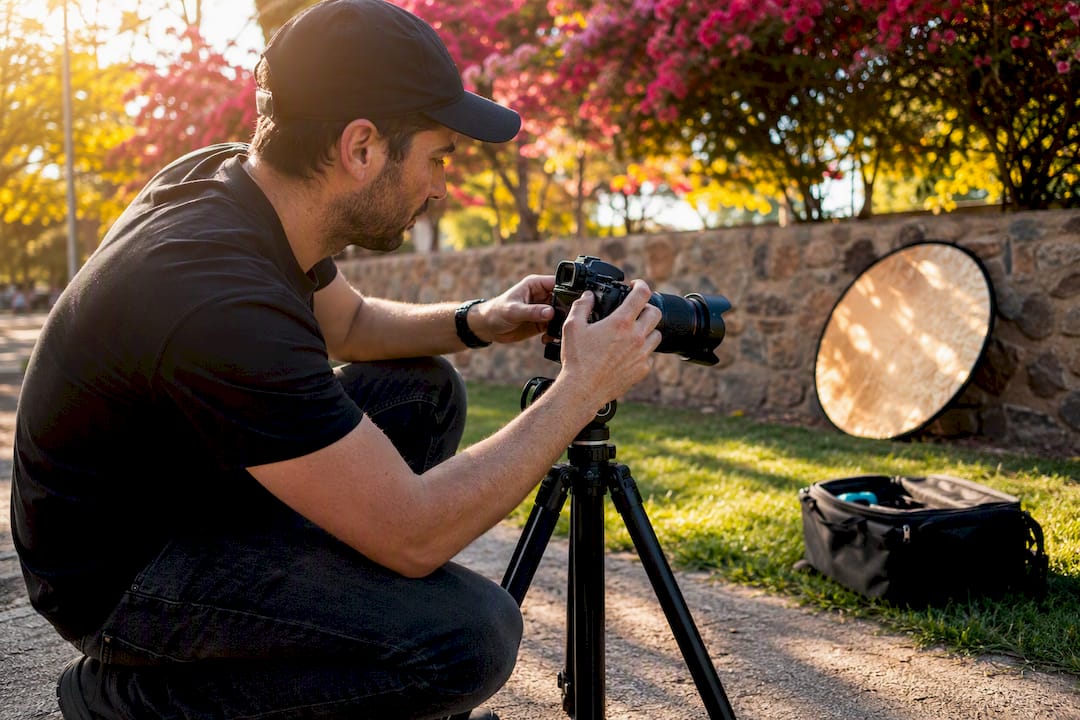
Long exposure techniques require exposure times of several seconds or minutes. We use tripods for stability and often employ bulb mode for exposures longer than 30 seconds. ND filters help achieve long exposures in daylight conditions. These techniques create light trails from car headlights or smooth water surfaces in seascapes. ISO selection affects image quality and creative possibilities. Low ISO values like 100-400 produce the cleanest images with minimal noise. High ISO settings enable handheld shooting in challenging light but introduce grain that some photographers use as a creative element.
Exposure Triangle in Different Scenarios and Camera Modes
Different photography scenarios demand specific approaches to exposure triangle application. Understanding these requirements helps us make informed decisions about camera settings and shooting modes.
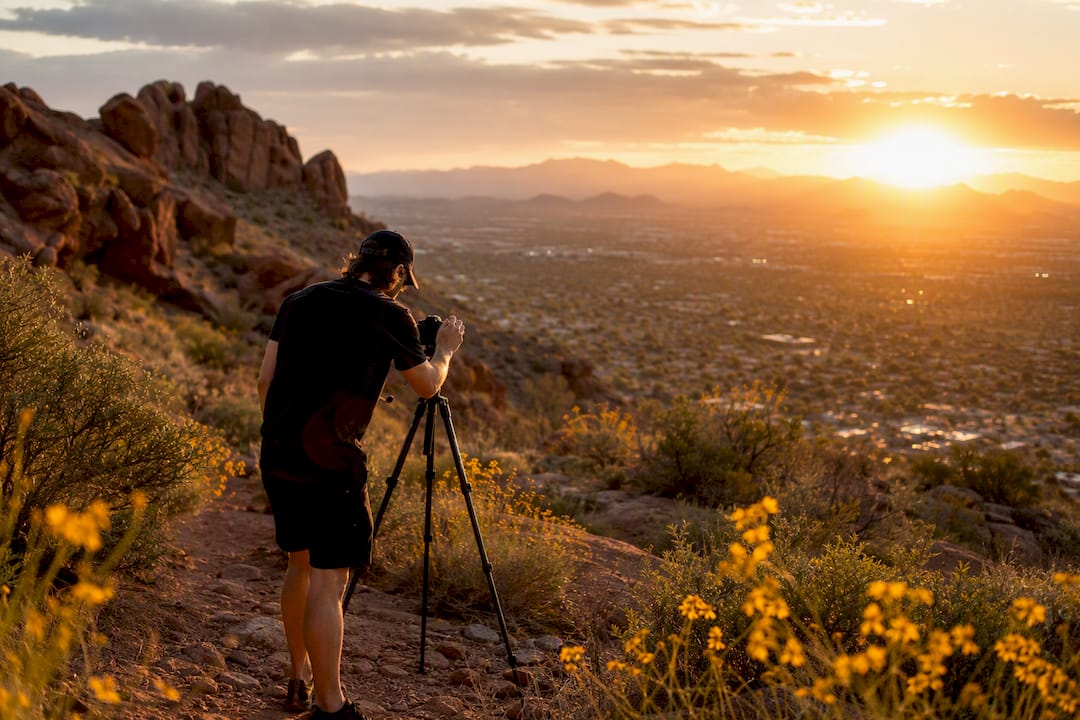
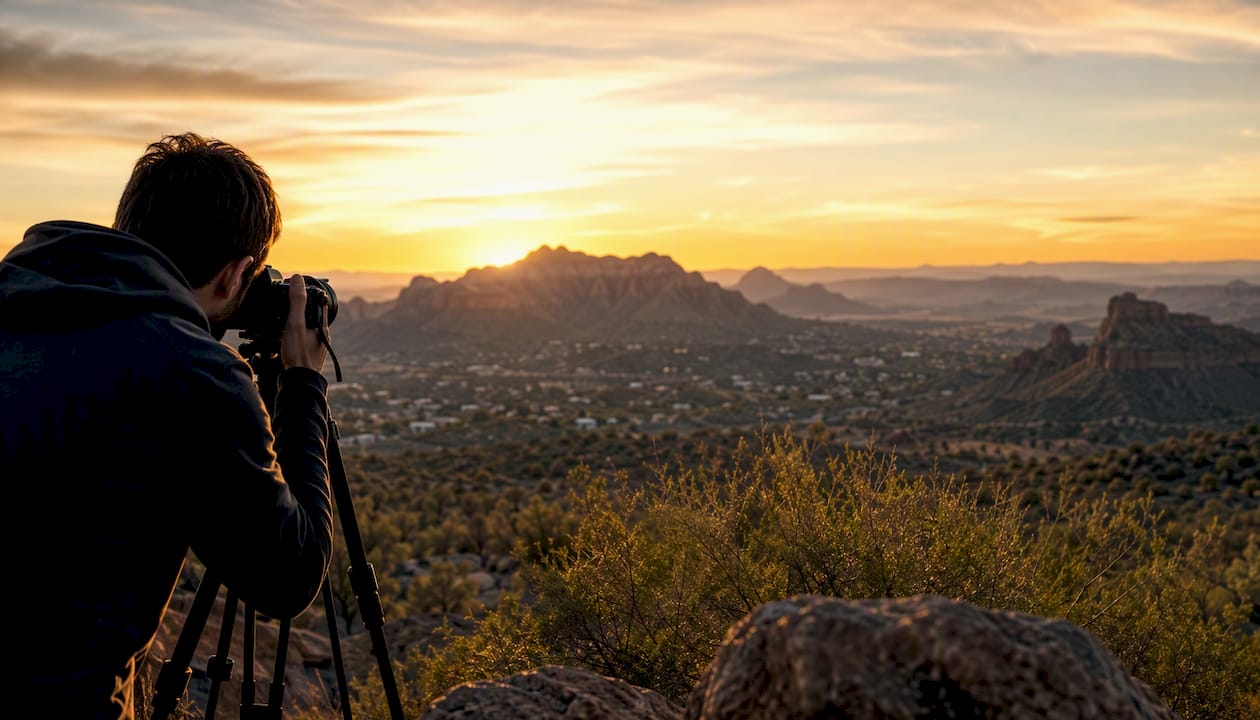
Landscape photography typically benefits from narrow apertures (f/8-f/16) for maximum sharpness and depth of field. We often use low ISO values and accept slower shutter speeds, mounting our camera on a tripod for stability. Program mode can work for beginners, but aperture priority gives better creative control.
Wildlife photography requires fast shutter speeds to freeze action, often 1/500s or faster. We frequently shoot wide open (f/2.8-f/5.6) and accept higher ISO values to achieve proper exposure. Shutter priority mode proves most effective when animal behavior changes rapidly.
Night photography pushes exposure triangle limits. We might use wide apertures, high ISO (623) 304-8996, and long exposures. For night landscapes, we balance these settings carefully - perhaps f/2.8, ISO 3200, and 20-second exposures to capture stars without trailing.
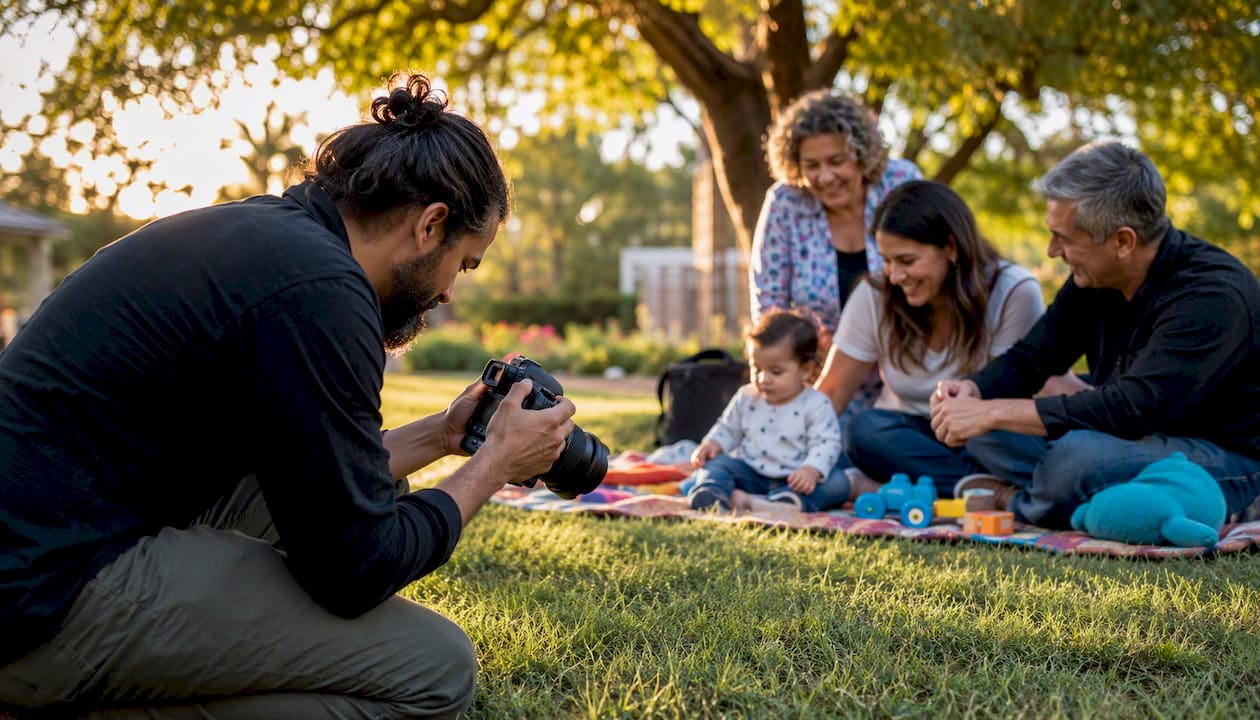
Portrait photography emphasizes shallow depth of field using wide apertures like f/1.8-f/2.8. We maintain fast enough shutter speeds to avoid camera shake when shooting handheld, typically 1/60s or faster depending on focal length.
Exposure bracketing helps in challenging lighting conditions with high dynamic range. We capture multiple exposures and blend them for optimal results. This technique proves especially valuable in architectural and landscape work where shadows and highlights exceed our camera's capabilities.